
Louisa and Nate’s Marriage Under Pressure
The Drover's WifeThis thread follows Louisa and Nate’s affectionate partnership as the duties of colonial law and the demands of compassion pull them into conflict over Molly’s fate.
increasing Bearing strength in each event
 decreasing
Bearing strength in each eventdecreasingA Marriage of Mutual Support

A Marriage of Mutual Support
Building a Life Together
Louisa and Nathanael Clintoff approach their move to Australia as a shared adventure. She supports his recovery from the despair that followed his war injury, while he values her intelligence, energy, and determination to pursue public work of her own.
Their affection includes humor, physical tenderness, and an ease in discussing difficult subjects. Louisa’s ambitions do not diminish the marriage; Nate takes pride in her plans and encourages her to build a women’s journal in their new home.
A Promise for the Future
Nate accepts the position in the high country partly because Louisa sees a chance for him to recover purpose beyond desk work. In turn, he promises that they will build a family and a future together.
Their shared optimism establishes the emotional ground they rely on later. The new country will test their ideals, but at this point they believe they can face its hardships as partners.
Survival on the Road

Survival on the Road
Trust in the Flood
When the Clintoffs’ wagon is caught in a swollen river, Nate makes a dangerous plan to save Louisa and Samuel. Louisa follows his directions, clinging to a horse while Nate takes their son through the rushing water.
The ordeal separates them in the current and makes their dependence on each other immediate and physical. Each must trust that the other will survive and find a way forward.
Relief on Dry Land
They are reunited with their son and reach Molly Johnson’s shanty exhausted and short of provisions. Their gratitude for being alive intensifies the affection between them, even as Louisa’s growing illness and Nate’s responsibilities soon create new worries.
The river crossing becomes an early reminder that their confident plans cannot control the land. Their marriage is a source of strength, but it cannot spare them from danger or uncertainty.
Shared Work and Home
Shared Work and Home
Louisa’s Public Purpose
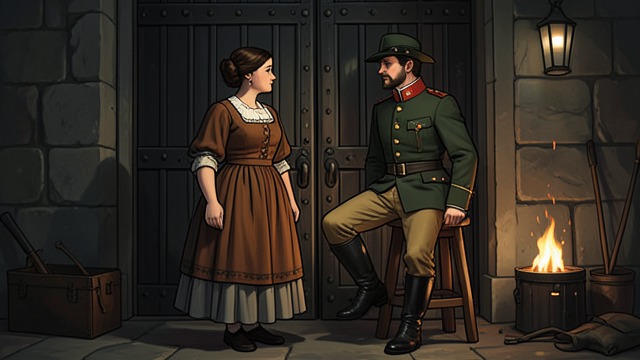
Louisa begins building a women’s journal and uses her meeting with Molly to learn what isolated women’s lives can involve. Nate admires her work and helps her prepare the first issue, which gives her a public voice in the town they have come to serve.
Their home life remains affectionate. They share jokes, meals, and moments of physical closeness, and Louisa talks openly about wanting another child and about her concern for Molly.
Private Care in a Difficult Place
Nate’s injured leg and the violent disorder of sale day bring the strains of his new role into their household. Louisa tends to him, while he tries to protect her and Samuel from the dangers he encounters outside.
The marriage still provides comfort, but their different responsibilities are beginning to pull them in separate directions. Louisa’s concern for women’s vulnerability will soon challenge Nate’s understanding of what his duty requires.
Justice Divides the Couple
Justice Divides the Couple
Nate’s Duty and Doubt
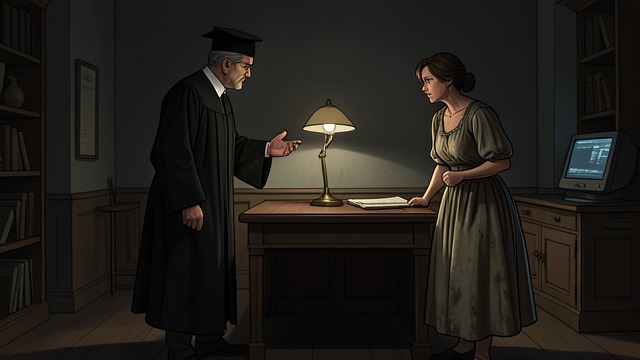
Nate believes the evidence against Molly is serious, including the killing of Trooper Spencer Leslie. He is bound to uphold the law, yet he recognizes the biased conditions surrounding her trial and cannot dismiss the abuse and fear that shaped her actions.
Louisa argues that the law has failed to protect a battered woman. Her own family history makes the case personal, and she presses Nate to see the difference between formal legality and justice.
Love Without Agreement
Their disagreement strains the intimacy that has anchored their marriage. Nate is troubled by Louisa’s protest and by the possibility that he has helped bring about Molly’s death; Louisa is frustrated that his oath seems to leave little room for mercy.
Neither stops caring for the other, but affection cannot make their moral conflict disappear. They remain joined in love while standing on opposite sides of a decision that cannot be undone.
Witnesses at the Gallows
Witnesses at the Gallows
Louisa Makes Her Position Public
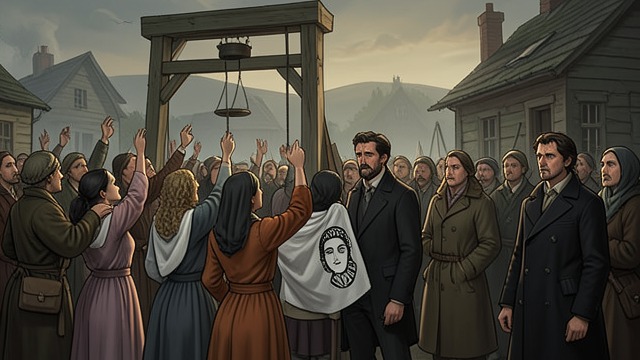
Louisa reaches the execution with other women and reveals a protest demanding a voice for battered wives and legal rights for women. Her action transforms private disagreement with Nate into a public challenge to the system he represents.
Nate is proud of her courage and deeply distressed by the execution. He cannot abandon his role as the law’s representative, even as he knows the proceeding has been shaped by racial prejudice and an all-male jury.
A Marriage Changed, Not Ended
The couple’s bond survives this moment, but it is altered by what they have witnessed. Louisa’s protest shows that she will not allow love for Nate to silence her convictions; Nate’s distress shows that duty has not extinguished his capacity for compassion.
Molly’s death leaves the Clintoffs with no easy reconciliation. Their relationship must now carry both affection and the knowledge that their choices, however differently motivated, had consequences for another family.
1893, before the Clintoffs leave London
During the journey from Melbourne to Everton
The first days after the Clintoffs reach Everton
After Molly is imprisoned and sentenced to death
The morning of Molly’s execution
